

Kratom Liver Damage
3 September 2026

Kratom can cause acute liver injury in rare cases, and the pattern is usually cholestatic rather than the kind that shows up in typical hangover-style symptoms. If you develop jaundice, itching, dark urine, or unusual fatigue after using kratom, stop the product immediately and get medical assessment. Tell your clinician about kratom use specifically, since most standard liver-injury screening does not ask about it. Most reported cases improve after stopping, but severe outcomes have occurred.
TL;DR:
- Kratom-related liver injury typically presents after about 14 days of regular use, with symptoms including fatigue, itching, dark urine, and jaundice.
- Most cases show a cholestatic injury pattern with median bilirubin levels around 11.7 mg/dL, but severe outcomes are rare.
- Diagnosing kratom liver injury relies on thorough history, liver function tests, and ruling out other causes, as no specific test detects kratom as the culprit.
- No proven treatment exists beyond stopping kratom; most patients recover fully, but some severe cases may require hospital care or transplant evaluation.
- Users should source tested products with confirmed alkaloid content, avoid mixing with alcohol or sedatives, and seek prompt medical advice if symptoms develop.
Table of Contents
- What kratom is and how the liver-risk signal emerged
- Typical clinical presentation and timeline
- Mechanisms, pathology and why diagnosis is uncertain
- How clinicians diagnose kratom-induced liver injury
- Management and outcomes: what happens after diagnosis
- Risk factors, drug interactions and harm reduction
- Kratomvia’s lab testing and what it screens for
- Clinical perspective: what to walk away knowing
- Choosing a tested Maeng Da strain if you continue using kratom
- Sources
What kratom is and how the liver-risk signal emerged
Kratom comes from Mitragyna speciosa, a tree native to Southeast Asia whose leaves contain two alkaloids that drive most of its effects: mitragynine and 7-hydroxymitragynine. These compounds act on opioid receptors, which explains why users report pain relief, mood lift, or stimulant-like energy depending on the dose and strain.
Liver toxicity was not part of the early conversation around kratom. It surfaced as usage climbed across the United States and Europe over the past decade, and surveillance networks started picking up a pattern worth investigating.
A few numbers frame the scale of the concern:
- The NIH’s LiverTox database has documented at least two dozen clinically apparent cases of kratom-associated liver injury, assigning it a causality likelihood score of “B”, meaning it’s a probable but not definitively proven cause.
- The U.S. Drug-Induced Liver Injury Network (DILIN) has formally adjudicated 11 kratom-related cases, giving researchers rare cohort-level detail rather than isolated reports.
- Controlled human trials remain scarce; a search of Clinicaltrials turns up very few interventional studies, which is why so much of what we know still comes from case reports rather than trials designed to test safety directly.
Typical clinical presentation and timeline
Kratom-related liver injury doesn’t announce itself immediately. Symptoms tend to build over weeks, not days, which is exactly why users often don’t connect a new pain in the right upper abdomen or unusual itching with something they started taking a fortnight earlier.
The DILIN cohort found a median latency of 14 days to symptom onset and 21 days to laboratory abnormalities after regular kratom use began. Peak total bilirubin in that cohort reached a median of 11.7 mg/dL, a level that produces visibly yellow skin and eyes in most patients.
Pro Tip: If you’ve started kratom in the last two months and notice dark urine or pale stools, don’t wait for jaundice to appear before getting bloodwork. Bilirubin often climbs before skin colour visibly changes.
Watch for this cluster of symptoms, roughly in the order they tend to appear:
- Fatigue and reduced appetite
- Nausea, sometimes with mild abdominal discomfort
- Pruritus (itching), often before jaundice is visible
- Dark urine and pale or clay-coloured stools
- Jaundice (yellowing of skin and eyes)
| Feature | Typical finding |
|---|---|
| Injury pattern | Cholestatic or mixed |
| Median symptom latency | 14 days |
| Median lab abnormality latency | 21 days |
| Median peak bilirubin | 11.7 mg/dL |
Clinicians classify the injury using the R-value, a ratio comparing ALT to alkaline phosphatase (AlkP) elevation. A low R-value points to a cholestatic pattern, meaning bile flow is obstructed rather than liver cells being directly destroyed. Most kratom cases fall into this cholestatic or mixed category rather than the pure hepatocellular pattern seen with something like paracetamol overdose.
Mechanisms, pathology and why diagnosis is uncertain
Nobody has pinned down a single mechanism behind kratom-induced liver injury, and that’s a genuine gap in the science rather than a minor detail. The leading theories point toward an idiosyncratic reaction, meaning it depends on individual susceptibility rather than dose alone, combined with possible enzyme interference.
Mitragynine and 7-hydroxymitragynine are metabolised through pathways involving cytochrome P450 (CYP) enzymes and UGT enzymes, the same systems responsible for clearing many other drugs and supplements from the body. Case reports and reviews suggest kratom may inhibit these pathways, which could allow toxic metabolites to accumulate or interfere with normal bile processing, though this remains a hypothesis rather than a settled mechanism.
Liver biopsies in reported cases typically show:
- Cholestatic hepatitis, with bile stasis visible on histology
- Patterns that can closely resemble autoimmune biliary disease, including conditions like AMA-negative primary biliary cholangitis
- No consistent evidence of viral or classic autoimmune markers
Diagnostic uncertainty comes down to three practical problems: kratom products vary enormously in composition and purity, users frequently combine kratom with other substances or medications, and there is no controlled human safety data to establish a clear dose-response relationship. The EFSA risk assessment on Mitragyna speciosa preparations flagged this same variability as the biggest obstacle to setting firm guidance values.
How clinicians diagnose kratom-induced liver injury
Diagnosing kratom-related liver injury is a process of elimination as much as detection, since no blood test says “kratom” on the label. A clinician working through suspected kratom-induced liver injury typically follows this sequence:
- Take a full supplement and substance history. Ask directly about kratom, since patients rarely volunteer it unprompted, and standard intake forms rarely ask.
- Order baseline liver panels. ALT, AST, alkaline phosphatase, total and direct bilirubin, and INR establish the injury pattern and severity.
- Calculate the R-value. This distinguishes cholestatic injury (low R) from hepatocellular injury (high R) or a mixed picture.
- Rule out other causes. Viral hepatitis serologies, autoimmune markers, and a careful acetaminophen history are essential before attributing injury to kratom.
- Consider imaging. Ultrasound helps exclude biliary obstruction that could mimic a drug-induced cholestatic pattern.
- Watch for red flags demanding urgent referral: rising INR, any sign of confusion or encephalopathy, or a rapid climb in bilirubin over days rather than weeks.
Because presentations overlap so closely with autoimmune biliary conditions, a thorough supplement history often matters more than any single lab value in reaching the correct diagnosis.
Management and outcomes: what happens after diagnosis
There’s no antidote for kratom-related liver injury, and the primary treatment is straightforward: stop the product and let the liver recover under supportive care. Hospitalisation becomes necessary when bilirubin climbs steeply, when the patient shows signs of coagulopathy, or when oral intake and hydration become difficult to manage at home.
Some case reports describe adjunctive use of ursodeoxycholic acid, a bile acid that may ease cholestatic symptoms, alongside occasional use of N-acetylcysteine or corticosteroids. None of these have been tested in controlled trials for kratom-specific injury, so their benefit remains anecdotal rather than proven. A case series on conservative management noted improved liver chemistry in some patients given ursodeoxycholic acid, though the small numbers involved make it impossible to separate the drug’s effect from the natural course of stopping kratom.
The outcome picture is genuinely reassuring for most patients:
- Most patients in the DILIN cohort had recovered by six months after stopping kratom.
- Hospitalisation was common during the acute phase, reflecting how symptomatic these cases tend to be.
- Severe outcomes, including acute liver failure requiring transplant evaluation, have occurred, though they represent a small minority of documented cases. A 2023 case report in the Journal of Hepatology describes one such severe presentation and argues for tighter herbal supplement regulation as a result.
Risk factors, drug interactions and harm reduction
Not everyone using kratom faces the same risk, and a handful of factors seem to raise it substantially. Polypharmacy tops the list: taking kratom alongside multiple medications processed through the same CYP and UGT enzyme pathways increases the odds of an interaction nobody predicted.
Pay particular attention to these combinations and risk factors:
- CNS depressants and alcohol, which compound sedation and add independent liver strain
- Drugs that inhibit or are metabolised by CYP3A4, CYP2D6, or UGT enzymes, since kratom’s alkaloids share these pathways
- Existing liver disease, even mild or undiagnosed, which reduces the organ’s reserve capacity to handle an idiosyncratic reaction
- Heavy or regular alcohol use, which independently damages the liver and may amplify kratom’s effects
Pro Tip: If you take any prescription medication regularly, particularly antidepressants, antifungals, or opioids, ask a pharmacist about CYP or UGT interactions before combining it with kratom rather than after symptoms start.
Practical harm reduction is simple to state, harder to enforce without deliberate sourcing choices: buy products backed by independent lab testing, avoid mixing kratom with alcohol or sedatives, and stop immediately with prompt testing if any of the symptoms described above appear.
Kratomvia’s lab testing and what it screens for
Product variability is a recurring theme in the case literature, and it’s one of the few risk factors a buyer can actually control. Certificates of analysis (COAs) typically screen for heavy metals, microbial contamination, and alkaloid content, giving you a way to check that what’s in the bag matches what’s on the label.
Kratomvia tests every batch independently before it reaches a customer, publishing results through its kratom lab reports page so buyers can check contamination and potency data directly rather than taking a label’s word for it. Sourcing focuses on mature leaves and controlled drying, two factors that influence alkaloid consistency batch to batch.
When reading a COA or questioning a supplier, look for:
- Confirmed mitragynine and 7-hydroxymitragynine percentages, not just a pass/fail statement
- Heavy metal and microbial screening results, with numerical values rather than vague assurances
- A batch number that ties the COA to the specific product you’re holding
- A testing date recent enough to reflect the batch you purchased
Clinical perspective: what to walk away knowing
The evidence on kratom and liver injury doesn’t support panic, but it doesn’t support dismissal either. Cases are rare relative to the number of regular users, and most patients recover fully once they stop. The danger lies in the two-week gap between starting kratom and noticing anything wrong, which means symptoms often get blamed on something else entirely.
Before seeing a clinician about suspected injury, note: when you started kratom, how much and how often, any other medications or alcohol, and the exact timeline of symptoms. That single piece of history can shortcut weeks of unnecessary testing. If you continue using kratom, choosing lab-tested batches with verified alkaloid content removes one major variable from an already uncertain picture.
— Kratomvia
Choosing a tested Maeng Da strain if you continue using kratom
If you’ve weighed the evidence above and decided to continue using kratom, the product you choose matters more than the case reports might suggest, given how much variability drives the risk profile discussed throughout this piece. Kratomvia tests every batch independently, publishing full contamination and potency results rather than asking you to trust a label.
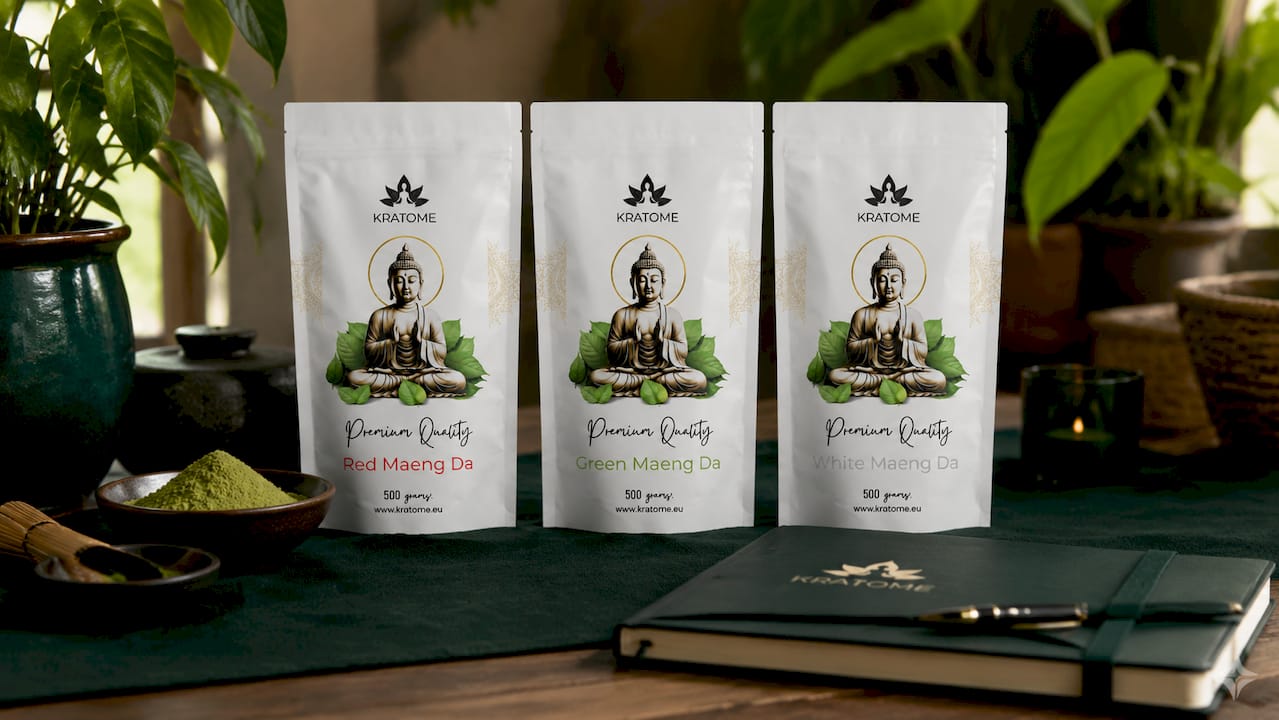
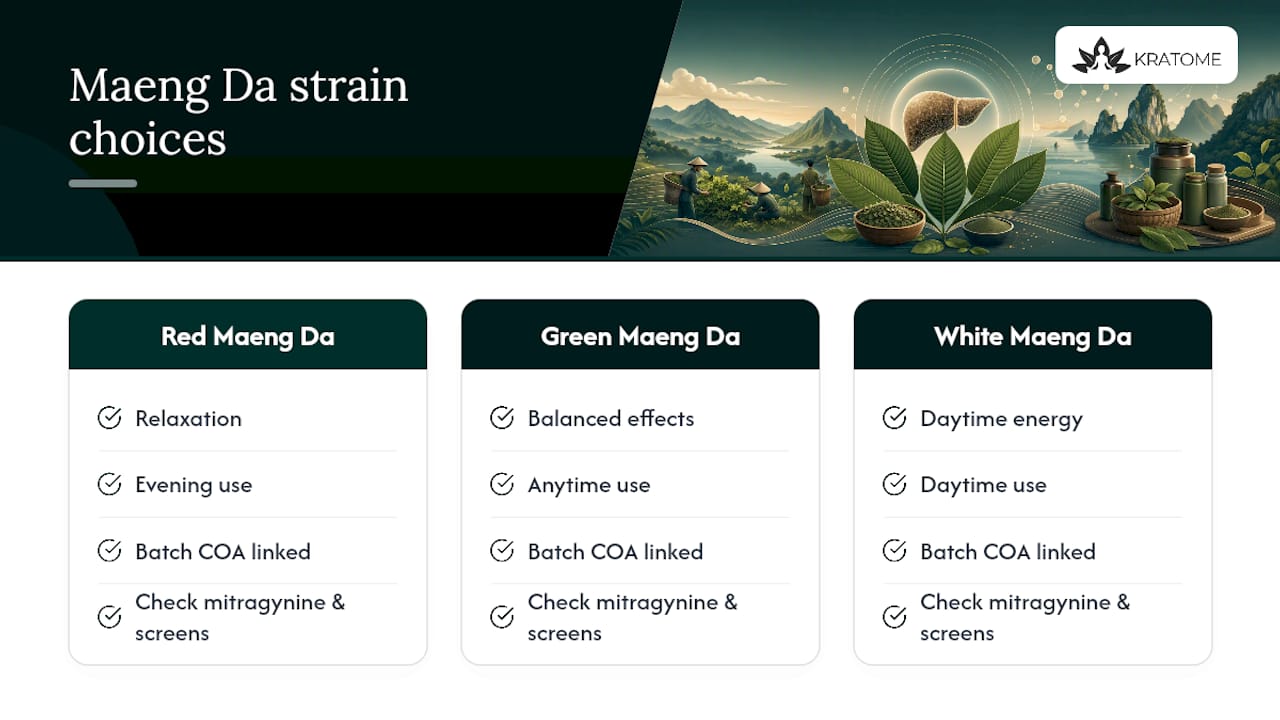
Three Maeng Da lines carry batch-level COAs you can check before buying. Red Maeng Da suits users prioritising relaxation, Green Maeng Da sits in the middle for balanced effects, and White Maeng Da works as a cleaner alternative to caffeine for daytime energy. Each product page links through to its corresponding lab report, so you can confirm mitragynine content and screen results before checkout.
One safety reminder stands above any strain choice: if you develop jaundice, dark urine, or persistent itching, stop and seek medical assessment first. Testing and sourcing reduce risk; they don’t eliminate it entirely. Once you’re confident in your decision, browse the current batch listings and check the matching COA before adding anything to your basket.
This article is general information, not a substitute for advice from a qualified doctor. Consult a qualified healthcare professional about your own circumstances before acting on anything here.
Sources
- Liver Injury associated with kratom, a popular opioid‑like product: Experience from the U.S. Drug Induced Liver Injury Network
- Kratom — LiverTox — NCBI Bookshelf — NIH
- Kratom-induced acute liver injury: A case study and the importance of herbal supplement regulation
Recommended
Disclaimer: This article is for educational and informational purposes only. Kratom is sold by Kratomvia as a botanical specimen for study and collection purposes, and is not intended, approved, or authorised for human consumption in the European Union. Our kratom is sold as a soap accessory and collectible item.


