

199 Salmonella Cases Linked to Kratom: Buyers, Demand a Batch CoA
2 September 2026

Yes, Salmonella contamination has been documented in kratom and was directly linked to a multistate outbreak. If you suspect a batch is affected, stop using it immediately, keep the packaging and lot number for reporting, and speak to a GP if you have symptoms. The CDC and FDA remain the most reliable sources for current advisories.
TL;DR:
- The 2017–2018 Salmonella outbreak linked to kratom involved 199 confirmed cases across 41 states, with over a quarter hospitalized.
- Contamination occurs during soil, harvesting, drying, or packaging, and Salmonella can survive dormant in dried kratom for extended periods.
- Buyers should verify batch-specific Certificates of Analysis that test for microbiological contamination, not just alkaloid levels.
- In case of suspected contamination, immediately stop use, record the batch info, and report it to authorities and your supplier.
- Reputable vendors test every batch for Salmonella and provide transparent lab results to prevent the risk of contaminated kratom reaching consumers.
Table of Contents
- What the outbreaks showed: numbers, timeline and evidence
- How Salmonella gets into kratom and why it can hide
- Symptoms, timeline and when infection turns serious
- What regulators did: recalls, advisories and EU monitoring
- A practical checklist for buying kratom without the guesswork
- How Kratomvia approaches contamination risk from sourcing to shelf
- If you think you’ve been exposed: what to do next
- Why the CoA matters more than the marketing claim
- Buy kratom with the testing paperwork to prove it
- Sources
What the outbreaks showed: numbers, timeline and evidence
The defining case study happened between January 2017 and May 2018, when a multistate Salmonella outbreak was traced back to kratom products sold across the United States. Investigators recorded 199 case-patients across 41 states, with 54 people hospitalised. No deaths were reported, but the hospitalisation rate was high enough to trigger a coordinated federal response.
Epidemiologists did not simply guess that kratom was the source. They used traceback investigations, interviewing patients about what they had eaten or taken in the days before symptoms started, then cross-referenced purchase histories and supplier records. Laboratory teams cultured Salmonella from unopened kratom packages and matched the bacterial strains to patient samples using pulsed-field gel electrophoresis and whole genome sequencing. Multiple serotypes turned up, which told investigators the contamination likely happened at several points in the supply chain rather than from one rogue batch.
| Metric | Figure |
|---|---|
| Case-patients reported | 199 |
| States affected | 41 |
| Hospitalisations | 54 |
| Outbreak window | January 2017 to May 2018 |
The core figure to remember: 199 confirmed cases across 41 states, with more than a quarter of patients hospitalised. That ratio is unusually high for a food-borne Salmonella event and is part of why the FDA investigation escalated so quickly to recalls.
Surveillance did not stop once the outbreak was declared over. Later product testing continued to surface contaminated batches from unrelated suppliers, which is the strongest evidence that the underlying problem was systemic quality control across parts of the industry, not one isolated incident.
How Salmonella gets into kratom and why it can hide
Kratom is made from dried, ground leaves of Mitragyna speciosa, a tree grown in Southeast Asia. Salmonella does not appear in the plant naturally; it is introduced somewhere between the soil and your kitchen cupboard. The likely entry points are well understood from food safety research on dried botanicals generally:
- Contaminated soil or irrigation water used on the growing plot
- Poor hygiene during hand harvesting of leaves
- Cross-contamination during drying, especially if leaves dry near animals or untreated water
- Grinding and packaging equipment that isn’t properly sanitised between batches
- Storage in humid or poorly ventilated conditions that let bacteria persist
The tricky part is what happens after contamination occurs. Salmonella can survive in dried botanical products in a dormant state for extended periods, effectively hibernating until it reaches a more favourable environment, such as your gut. Low moisture doesn’t kill the bacteria; it just slows it down.
This is exactly why sensory checks are useless here. Kratom powder that looks green, smells earthy, and tastes as expected can still carry viable Salmonella. There is no colour change, no off smell, no bitter warning note. The only way to know is laboratory testing.
Symptoms, timeline and when infection turns serious
Salmonella symptoms typically start 12 to 72 hours after exposure, and most healthy adults recover within four to seven days without needing specific treatment.
Watch for this cluster of symptoms:
- Diarrhoea, sometimes with blood
- Fever
- Stomach cramps
- Nausea and occasional vomiting
- Headache and fatigue
Most cases resolve on their own with rest and fluids. But the outbreak data flags a genuinely concerning statistic: over a quarter of confirmed patients in the 2017–2018 outbreak were hospitalised, well above what you’d expect from typical food-borne Salmonella cases. That suggests either a particularly virulent strain, delayed diagnosis because kratom wasn’t an obvious suspect, or both.
Certain groups face higher risk of complications: infants, adults over 65, pregnant women, and anyone with a weakened immune system from conditions like diabetes, cancer treatment, or HIV. In these groups, the infection can spread beyond the gut into the bloodstream, a condition called bacteraemia, which can seed infection in joints, the heart valves, or the brain lining if left untreated.
Contact a GP promptly if diarrhoea lasts more than a few days, if you see blood in your stool, or if fever climbs above 39°C. Go to emergency care if you become severely dehydrated, confused, or if you’re in one of the higher risk groups above and start showing any symptoms at all.
What regulators did: recalls, advisories and EU monitoring
Once the outbreak was confirmed, both American and European agencies moved to warn the public and pull affected stock.
- The FDA and CDC jointly investigated the outbreak, issuing consumer advisories telling people not to consume any kratom linked to the recall and coordinating product withdrawals with named suppliers.
- German authorities, through the BfR, have separately warned about kratom’s safety profile, flagging both microbial contamination risk and potential organ toxicity, while noting kratom holds no authorised status as a medicine or food product in Germany or the wider EU.
- The EU’s Rapid Alert System for Food and Feed continues to monitor botanical imports, including kratom, for exactly this kind of biological hazard.
The practical takeaway for anyone in Europe or the UK is straightforward: treat any recall notice as non-negotiable, stop consumption immediately, and report suspected contamination to your national food safety authority rather than just returning the product for a refund. You can check the current legal status of kratom in your country, since regulatory attention varies significantly by jurisdiction.
A practical checklist for buying kratom without the guesswork
You can’t eliminate risk entirely when buying any dried botanical product, but you can stack the odds heavily in your favour. Here’s the order of operations we’d recommend.
- Check for a batch-specific certificate of analysis. A credible CoA names the exact lot, the test method used, the detection limits, and the accrediting laboratory. If any of those four elements is missing, treat the document as decorative rather than proof.
- Confirm the testing actually covers microbiology, not just alkaloid content. Plenty of vendors test for mitragynine levels and skip Salmonella, E. coli, and heavy metals entirely. Ask directly if you can’t find it stated.
- Look for traceability back to the grower. Reputable suppliers can tell you roughly which region and farm a batch came from, which matters because contamination sources like soil and irrigation water trace back to specific growing conditions.
- Ask about processing controls. Good Agricultural Practices and documented drying and handling procedures reduce the number of points where contamination can enter.
- Treat “not for human consumption” labelling as a red flag, not reassurance. This phrasing is often used to sidestep food safety regulation while the product is still clearly sold and marketed for ingestion, a pattern consumer protection groups have flagged repeatedly.
A few extra points worth knowing before you buy or store kratom:
- Don’t assume home heating, microwaving, or washing dried powder will make it safer. Validated kill steps for Salmonella require precise industrial steam or irradiation processes tested against the specific product matrix; kitchen-level heat is inconsistent and can’t be verified.
- Store kratom in a cool, dry, airtight container away from moisture, which slows bacterial reactivation even in already-tested batches.
- If you’re notified of a recall, dispose of the product in sealed packaging rather than composting it or feeding it to animals, and photograph the batch label before disposal in case you’re asked to report it.
Pro Tip: Save every CoA you receive alongside the batch number on the bag itself. If a recall notice appears months later, you’ll be able to check your exact lot in seconds instead of guessing whether your stock is affected.
The how to choose quality kratom guide covers supplier vetting in more depth if you want the fuller version of this checklist, including how to interpret a lab’s accreditation.
How Kratomvia approaches contamination risk from sourcing to shelf
Kratomvia sources kratom from established growers in Southeast Asia and uses controlled drying techniques specifically because uncontrolled drying is one of the contamination points outbreak investigators identified. Every batch, whether it’s Red Maeng Da, Green Maeng Da, or White Maeng Da, goes through independent laboratory testing before it reaches a customer.
What that testing looks like in practice:
- Microbiological screening that specifically checks for Salmonella, not just alkaloid potency
- Batch-level certificates of analysis that customers can view rather than take on trust
- Documented handling and traceability back through the supply chain, addressing the exact gap that let the 2017–2018 outbreak spread across 41 states before it was caught
A CoA is only useful if it states its method and limits clearly, a point echoed in independent guidance on reading lab reports. Kratomvia’s approach is to make that documentation available rather than optional, which is the single biggest lever any buyer has over contamination risk they can’t see or smell.
If you think you’ve been exposed: what to do next
Move through these steps in order rather than trying to do everything at once.
- Stop using the product immediately and seal it in its original packaging.
- Record the batch or lot number, supplier name, and purchase date before you dispose of anything.
- Contact the supplier to report the suspected contamination and ask whether other customers have reported symptoms.
- Report to your national food safety or public health authority, which helps trigger wider investigation if a pattern is emerging.
- See a GP if symptoms persist beyond two or three days, or immediately if you notice blood in stool, high fever, or signs of dehydration. A stool culture confirms Salmonella and identifies the strain.
- Go to hospital without delay if you’re in a higher risk group and develop any symptoms, since bloodstream infection needs intravenous antibiotics and can escalate quickly if treatment is delayed.
Most confirmed cases only need fluids and rest. Antibiotics are typically reserved for severe illness or high risk patients, since overuse can prolong bacterial shedding in otherwise mild infections.
Why the CoA matters more than the marketing claim
The conventional advice on kratom safety tends to stop at “buy from a reputable source,” which sounds sensible and tells you almost nothing actionable. Reputation is a feeling. A certificate of analysis with a stated method, a detection limit, and an accredited laboratory name is a fact you can check.
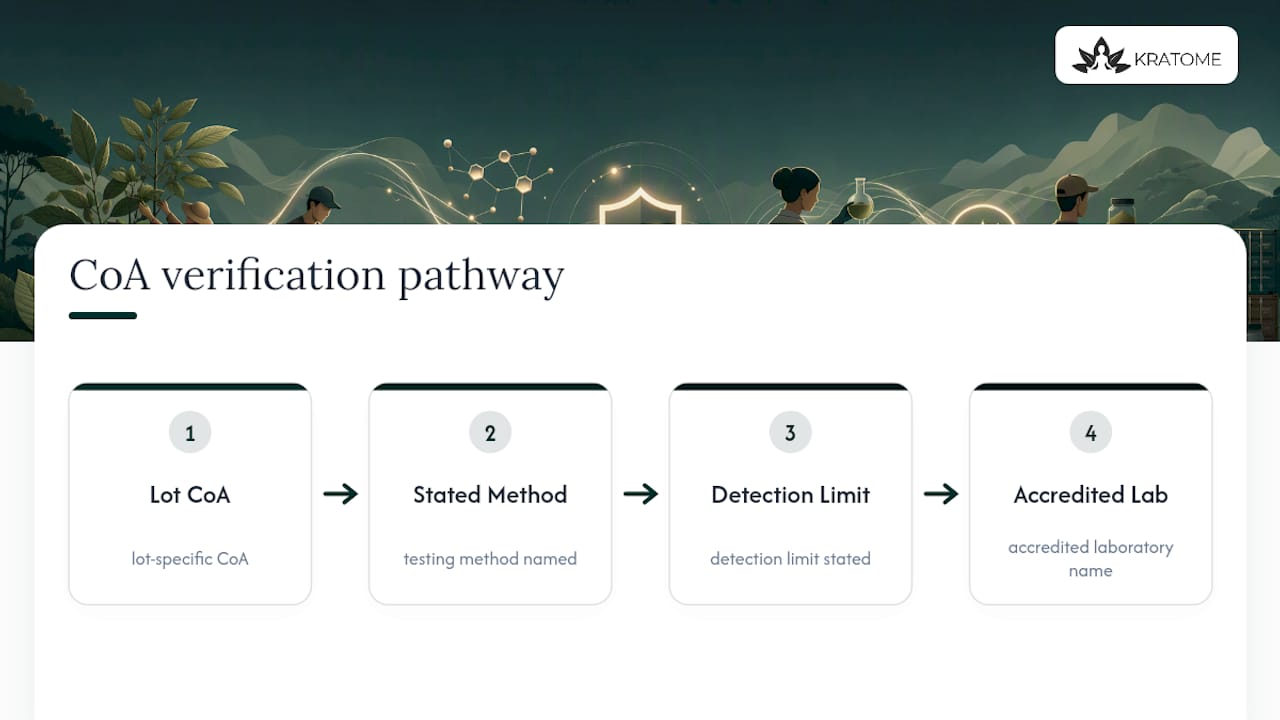
What the outbreak data actually supports is narrower and more useful than most safety articles admit: the 2017–2018 cases weren’t caused by kratom as a plant, they were caused by supply chains with no consistent microbiological testing regime. That distinction changes what you should prioritise as a buyer. Alkaloid potency, strain colour, and origin stories matter far less than whether a specific batch was screened for Salmonella before it shipped.
If there’s one habit worth building, it’s asking for the lot-specific CoA before you ask about anything else. Everything downstream, storage, dosage, strain choice, only matters once you know the product in front of you was actually tested.
— Kratomvia
Buy kratom with the testing paperwork to prove it
Kratomvia exists because “trust the label” isn’t a safety standard, batch-level lab testing is. Every strain we sell, from Red Maeng Da to Green Maeng Da to White Maeng Da, ships with independent microbiological testing behind it, so you’re not relying on how a powder looks or smells to judge whether it’s safe.
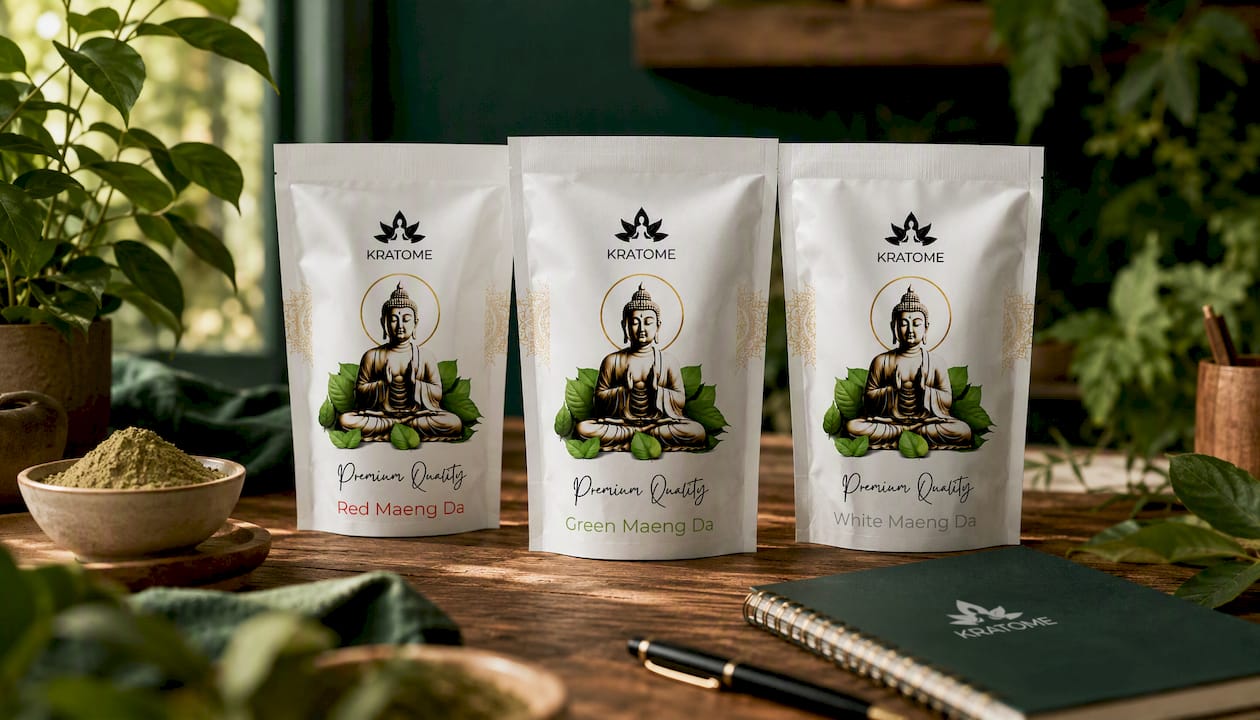
We source from growers we know, control the drying process ourselves rather than outsourcing it blind, and publish the certificates of analysis for every batch so you can check the Salmonella screening yourself rather than taking our word for it. That’s the same traceability gap that let the 2017–2018 outbreak spread across dozens of states before anyone caught it.
If you’re ready to buy with that reassurance already built in, browse the current batches and check the lab report attached to the strain you want before you check out.
This article is general information, not a substitute for advice from a qualified doctor. Consult a qualified healthcare professional about your own circumstances before acting on anything here.
Sources
- A Multiple-Serotype Outbreak of Salmonella Infections Linked to Kratom, United States, 2017–2018
- FDA investigates multistate outbreak of Salmonella infections linked to products reported to contain kratom
- Kratom‑zubereitungen: Einnahme kann Gesundheitsbeschwerden hervorrufen – BfR
- Kratom – erhebliches Risiko | Verbraucherzentrale NRW
Recommended
Related reading

6 September 2026 · en
Frequency, Not Dose: Long Term Kratom Risk and Lab Tested Transparency
Read article
6 September 2026 · en
Kratom nausea: spot early signs and choose lab tested, lower doses
Read article
5 September 2026 · en